Editorial · Why most algo-signal traders quit within a year
The signal was right. The trader still lost money.
Every trading forum has the same thread: someone bought a signal service, followed it faithfully for a few weeks, and blew up anyway. The signal itself often wasn't wrong — the win rate over the following month usually looked fine in hindsight. What broke was everything downstream of the signal: position size, stop placement, and what the trader did on the three losing trades before the winning one arrived.
That gap — between "the model said long" and "I sized it, risked it, and survived being wrong" — is where almost all retail algo-trading losses actually happen. It's rarely a model problem. It's an execution and risk-sizing problem wearing a model's clothes.
But there's one thing that separates traders who last three years from traders who last three months: they treat the signal as one input into a sizing decision, never as the decision itself.
That distinction sounds obvious written down. It is almost never followed in practice, because following it requires pre-committing to rules before you're emotionally involved in a specific trade — and most signal products hand you the "what" (buy/sell) without ever addressing the "how much" and "for how long you can be wrong."
In practice this means treating every signal as a probability-weighted hypothesis, not a certainty, and sizing accordingly before a single dollar moves.
Is algorithmic trading still worth learning in 2026?
The honest answer is: the tooling is more accessible than ever, and that's exactly why the interpretation layer matters more, not less. Cheap access to signals and screeners has not made retail outcomes materially better on average — it has mostly changed what the losing mistake looks like.
Renaissance Technologies co-founder James Simons spoke publicly, before his passing, about how the firm's edge came less from any single signal and more from disciplined position sizing and risk controls applied consistently across thousands of small, imperfect edges — a philosophy widely discussed in profiles of the firm's approach to systematic trading.
Cliff Asness of AQR Capital Management has made a related point in multiple public interviews and writings: that factor and signal-based strategies fail investors most often not because the underlying signal decayed, but because investors abandon the discipline exactly when a normal drawdown arrives.
Both perspectives point the same direction: the playbook you apply around a signal — sizing, stop discipline, and what you do during a losing streak — determines outcomes more than the sophistication of the signal itself.
Independent market-structure commentary from Bloomberg's trading-desk coverage has also noted the growing role of retail order flow and algorithmic execution in shaping short-term price action — a reminder that today's signal environment is shaped by more automated participants than a decade ago, which changes how quickly edges can compress.
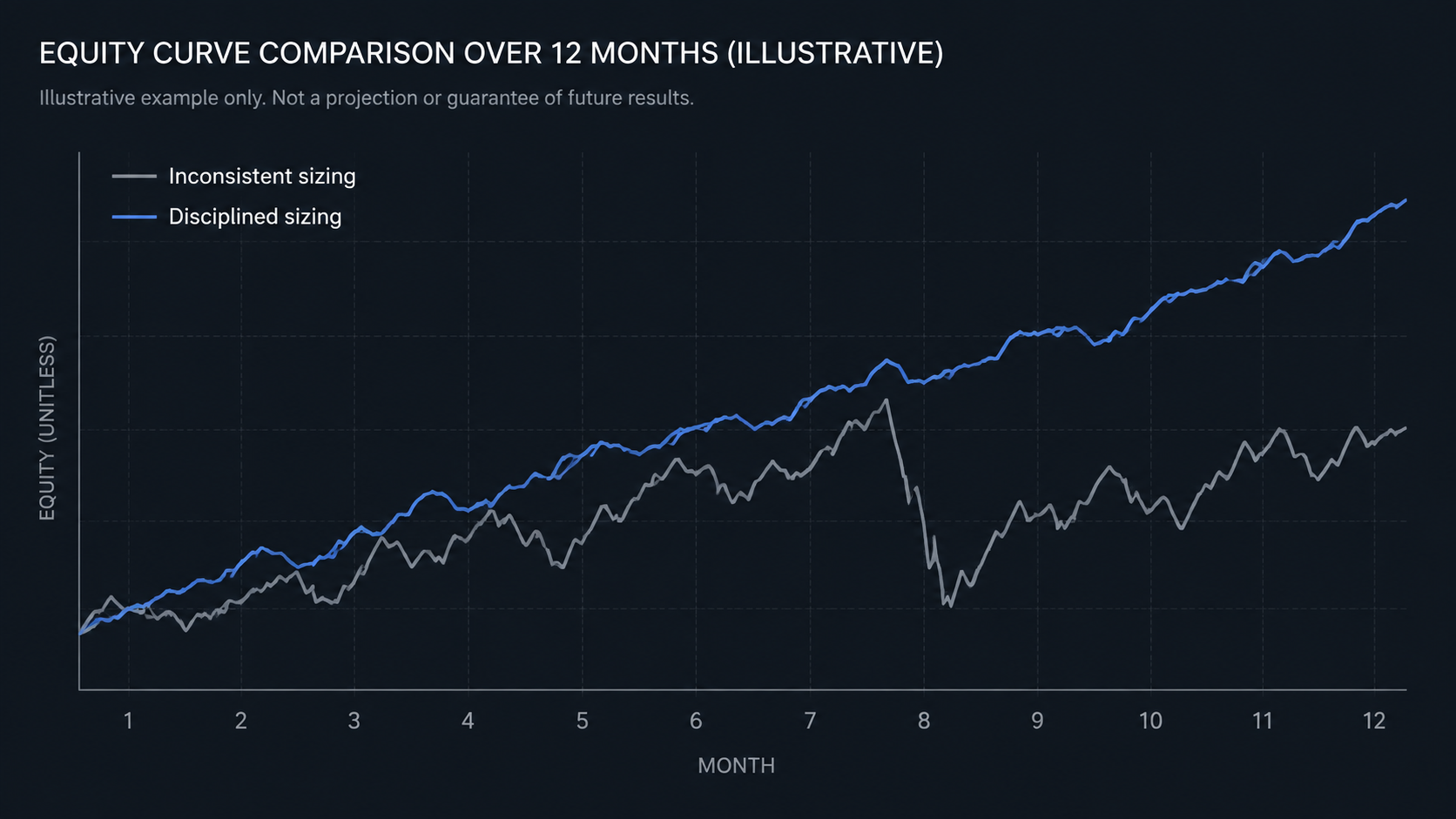
The parallel to the 1987 portfolio-insurance era is instructive: many of the funds that used early systematic hedging strategies didn't fail because the underlying models were unsound — they failed because sizing and liquidity assumptions broke down simultaneously under stress, a dynamic widely documented in post-mortems of that period.
The pattern repeats today in miniature every time a retail trader takes a signal at full size, gets stopped out twice in a row, and doubles size on the third attempt "to make it back." The signal didn't change. The sizing discipline did.
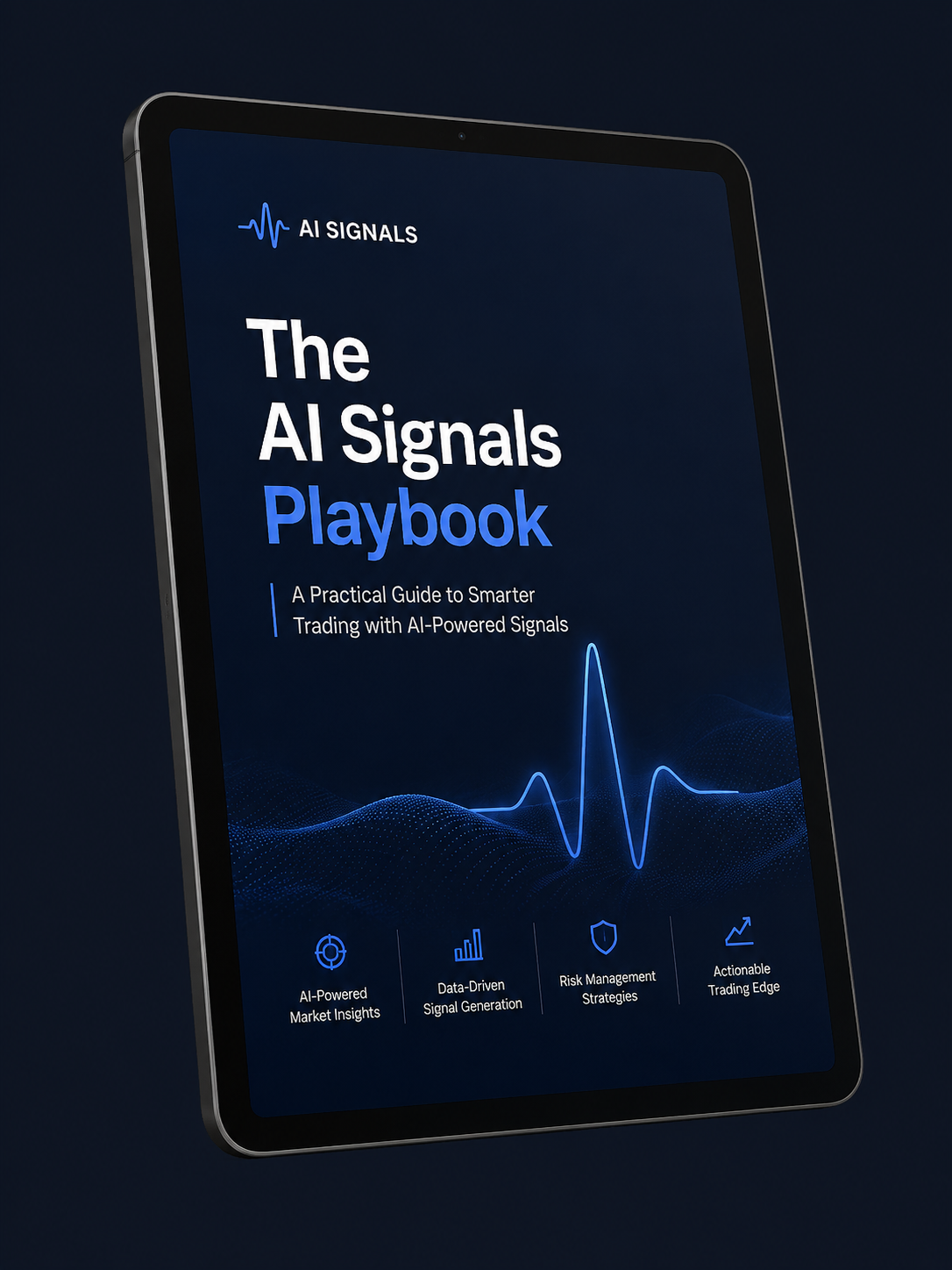
If you want the full sizing and risk system — not just "here's a signal" — get The AI Signals Playbook below. It's a 118-page guide built around position sizing, stop logic, and drawdown rules you set before you're emotionally attached to a trade.
None of this requires a proprietary model or an expensive data feed. It requires a written set of rules for how a signal converts into a position size, and the discipline to apply those rules identically on your best day and your worst day.
The traders who last aren't the ones with the best signal. They're the ones who never let a single signal decide how much of their account is on the line.